My Favorite Cartoons from the '90s — Part 1
Woody Woodpecker on SBT TV, The Flintstones, Scooby-Doo, and the unforgettable Wacky Races—a journey through the cartoons that brought the afternoon to a standstill and dominated TV in the ’90s. And that last one changed me forever!
CARTOONS
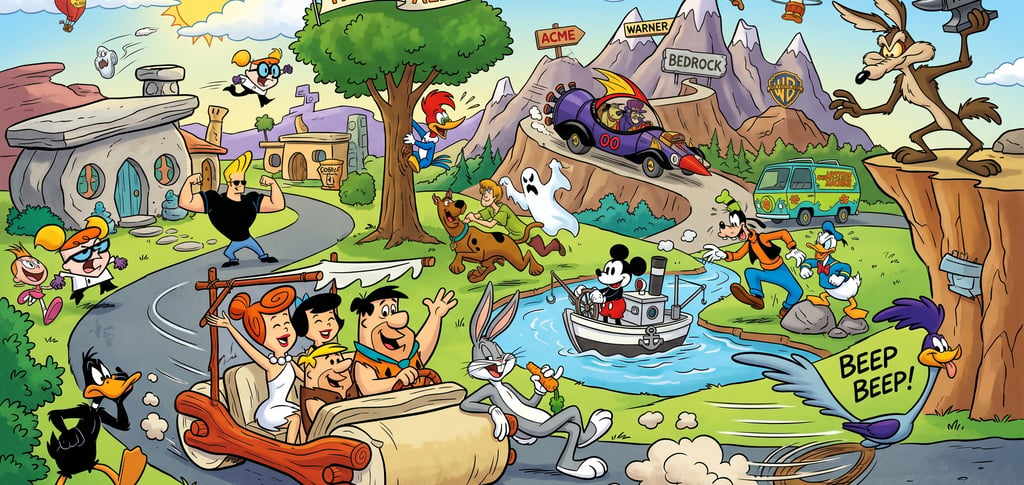
Before YouTube, before Netflix, before streaming existed, children’s programming operated on a simple, unquestionable principle: you watched whatever was on, whenever it was on, and you were happy with that.
There were no previous episodes available to rewatch. The next episode didn’t load automatically. If you arrived late, you missed it. If it cut to a commercial break, you waited. And even so—perhaps because of that—the relationship with cartoons was intense, loyal, and passionate.
In the ’90s, Brazilian TV had an animation lineup that today seems impossible to have existed. SBT, Globo, Manchete, and Band competed for the children’s audience with a menu ranging from absolute classics to brilliantly absurd shows.
And I was there, in front of the tube TV, watching it all with the dedication of someone who knew—even without realizing it—that this was special.
Today I want to talk about the cartoons that left the biggest mark on my childhood. Not the anime—those have their own post and deserve it. I’m talking about Western cartoons, the ones with a looser, more comical, more chaotic style—and that still make us smile today when they pop up unexpectedly in our memories.
Let’s reminisce together.
Woodpecker — That Laugh You Can't Get Out of Your Head
If you grew up in Brazil in the 1990s and SBT TV was part of your daily routine, there’s a laugh that’s permanently etched in your memory.
“Ha-ha-ha-HA-ha.”
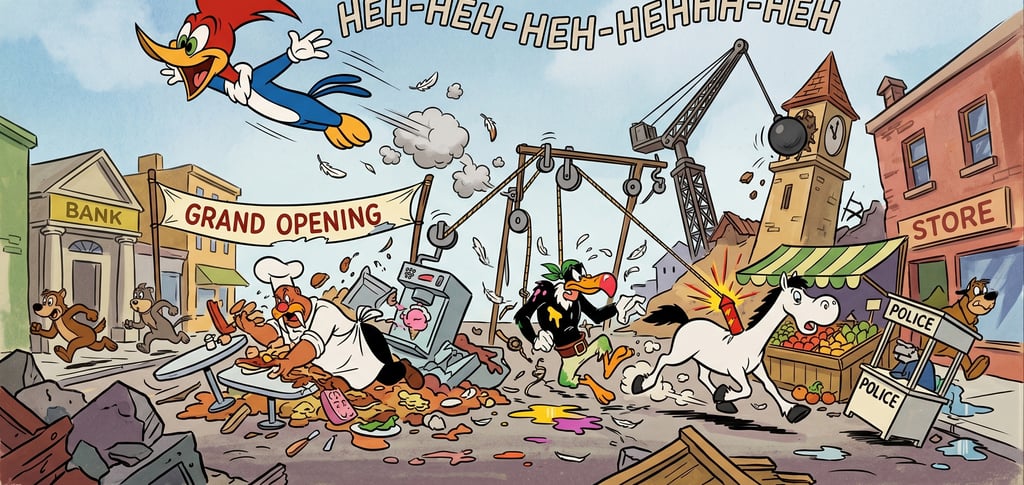
Woody Woodpecker was a creature of pure animated anarchy. There was no moral to the story. There was no life lesson. There was a completely reckless red and blue bird who would show up, cause as much chaos as possible in the lives of anyone nearby, and leave laughing in that unmistakable way while everything fell apart.
And that’s exactly why we loved it.
At a time when many cartoons tried to teach something, Woody Woodpecker was honest: he was there to wreak havoc. Wally Walrus, Buzz Buzzard, Gabby Gator — all the characters who tried to lead a normal life were inevitably destroyed by the most irresponsible bird in the world of animation.
SBT TV aired Woody Woodpecker for years on end, in blocks that seemed to go on forever—and no one complained. Each episode was short, to the point, and ended with that laugh that got stuck in your head and stayed there for hours.
To this day, when someone does something completely unnecessary just to cause trouble, I think of Woody Woodpecker. Because he was, perhaps, the first neutral chaotic character in my life.
Honest question: can you hear Woody Woodpecker’s laugh in your head right now? Because I can. And I don’t regret it.
Hanna-Barbera — The Classic Factory
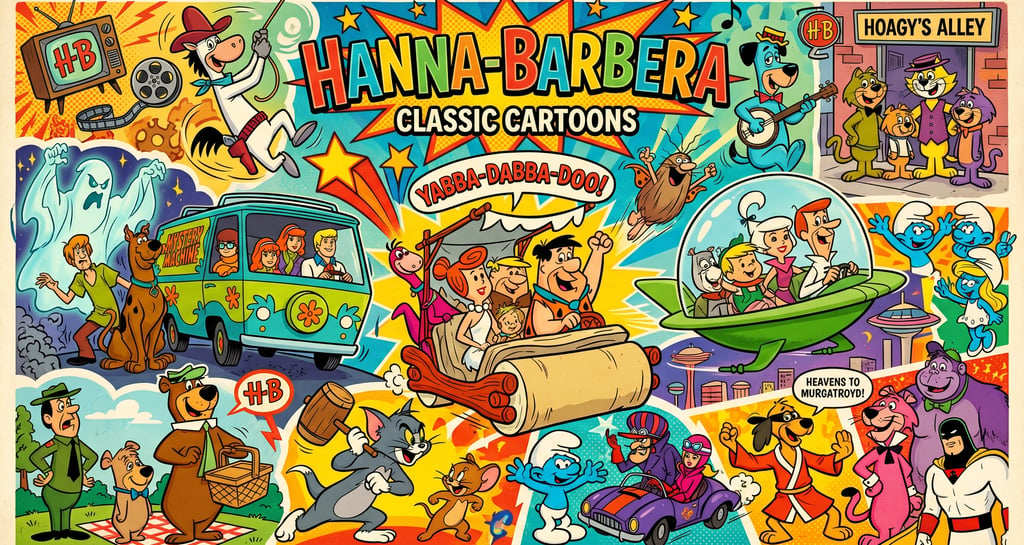
If you grew up in the 1990s watching TV in Brazil, you were raised by Hanna-Barbera without even knowing their names.
William Hanna and Joseph Barbera built an animation empire that produced decades of content—and most of the characters you consider childhood classics likely came from there.
Scooby-Doo — The Cowardly Dog Who Solved Crimes
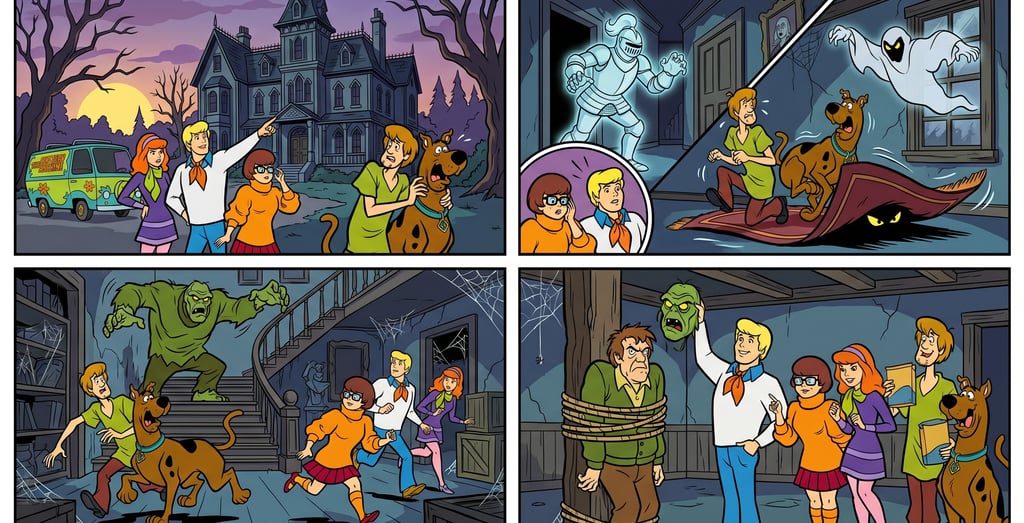
Scooby-Doo deserves a special mention because it was unlike any other.
It had a storyline. It had a mystery. It had a resolution. It was, technically, a crime investigation cartoon starring a cowardly dog and a perpetually hungry teenager.
The group—Fred, Daphne, Velma, Shaggy, and Scooby—would arrive at a haunted place, split up in a way that was clearly going to go wrong, get scared time and time again, and in the end unmask the villain, who was invariably “the old man from the farm we saw at the beginning of the episode.”
The formula was predictable. And it worked every time.
Shaggy’s partnership with Scooby was the heart of the show—two cowards who somehow always ended up in the scariest place, running away from something terrifying while eating something at the same time. It was physical comedy and situational comedy wrapped up in a child-friendly mystery.
Scooby-Doo has gone through versions, remakes, and reinterpretations for decades. But the ’90s version we used to watch on TV had that specific charm of simpler, looser animation, which today has an unmistakable nostalgic aesthetic.
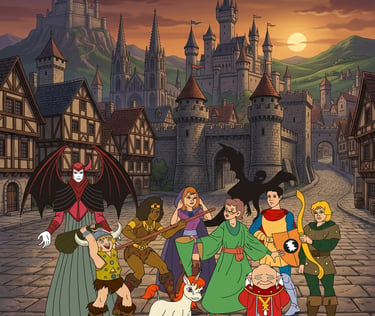
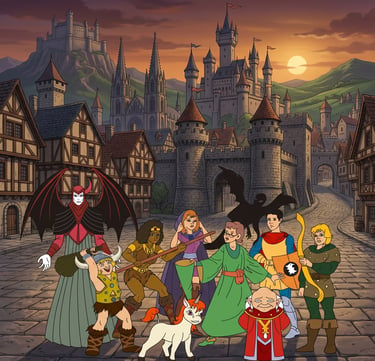
Dungeons & Dragons — The Origin of Everything That Came After
I have a confession to make.
I almost finished this post without mentioning the cartoon that, looking back today, was probably the most important one of my childhood. Not the funniest, not the most chaotic—but the one that left the deepest and most lasting impression.
Dungeons & Dragons.
If you’re not familiar with it, the concept went like this: a group of ordinary kids gets on a roller coaster at an amusement park and is transported to a medieval fantasy world. Each one receives a weapon or magical item, a mysterious guide called the Dungeon Master—that small, enigmatic old man—and a mission that is both simple and impossible at the same time: to find their way back home.
But, just to provide some context for this post, I’ll mention the first games—besides the three that came with the console—that surprised me the most back then. I’m not talking about the best-known games or the best ones technically speaking, but the ones that left me with great memories.
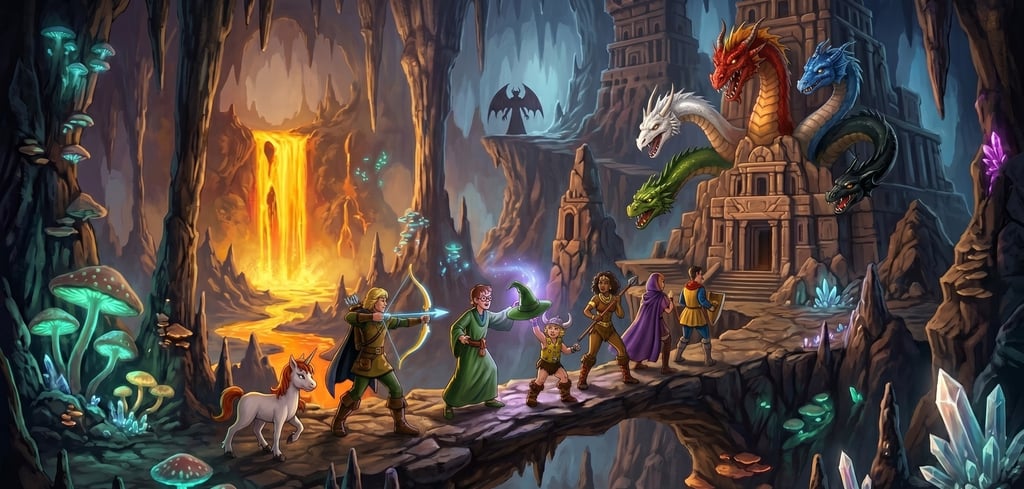
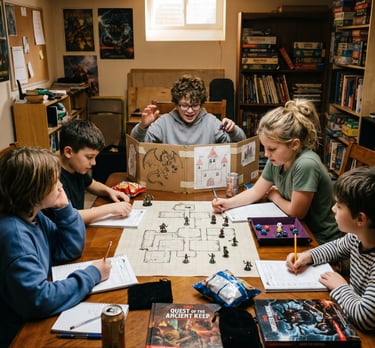
Dungeons & Dragons planted that seed. And it grew quietly for years, until the day a book with a long title about a lord of the rings fell into my hands. Until the day I sat down for the first time at a table with friends, odd-shaped dice scattered in front of me, a blank character sheet, and someone saying, “You’re in a tavern.”
Until the day I saw the map of Westeros and knew, immediately, that I was going to love every second of it.
It all started here. On a roller coaster car. In a fantasy world. In a Saturday morning cartoon that didn’t know the magnitude of what it was creating.
Dungeons & Dragons never had an official ending. The group never went home. For decades, that cliffhanger remained—and maybe it’s better that way. Some adventures don’t need closure. They just need to keep living on in the memories of those who watched.
Tom and Jerry — Cartoon Violence at Its Best
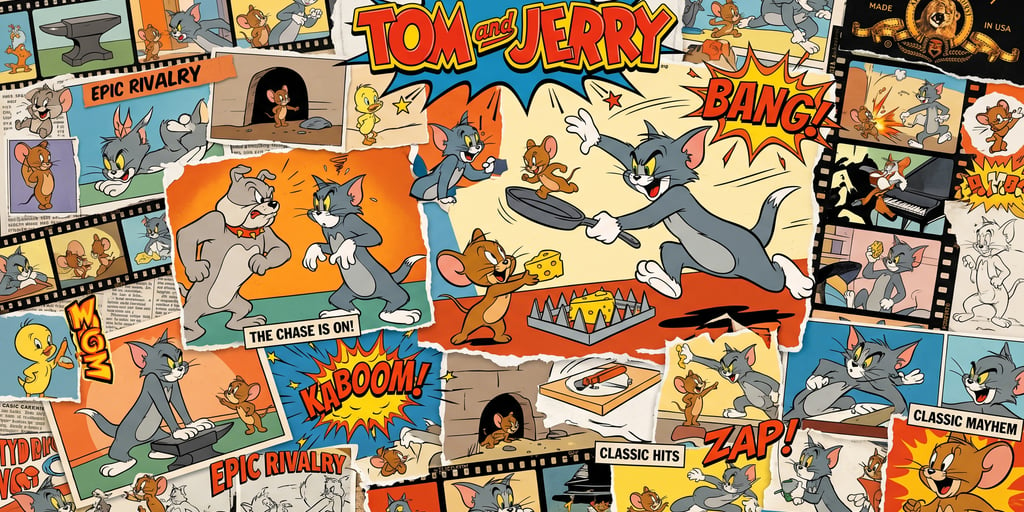
A cat chasing a mouse. That’s the whole concept. There’s no story beyond that. No narrative arc, no character development, no resolution. It’s just chasing, fighting, explosions, a hammer to the head, an iron on a flattened face, a mustache on fire, and everything back to normal in the next episode.
And it is, without exaggeration, one of the most brilliantly produced animations in history.
What made Tom and Jerry work wasn’t the violence itself—it was the perfect timing. The pause before the tumble. Tom’s resigned look before taking another hit. The moment when Jerry realizes he’s gone too far and lets out that sheepish little laugh. Every beat was choreographed like music.
The soundtrack, by the way, was absurdly good. Orchestrated live, synchronized with every movement, it turned chases into comic ballets. You didn’t need dialogue because the music told the whole story.
On SBT TV in the ’90s, Tom and Jerry was a guaranteed staple. And the curious dynamic of the cartoon was that you never knew exactly who to root for. Sometimes Jerry was likable. Sometimes Tom deserved to win. And when the two joined forces against a common enemy—that was the episode everyone remembered.
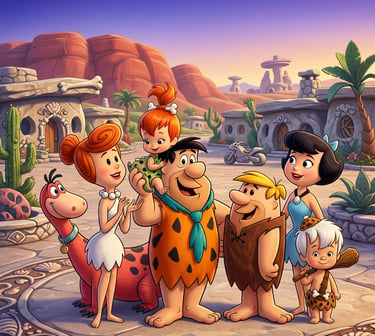
🦕 The Flintstones — The Stone Age Family Everyone Loved
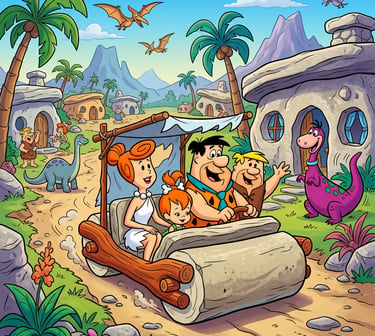
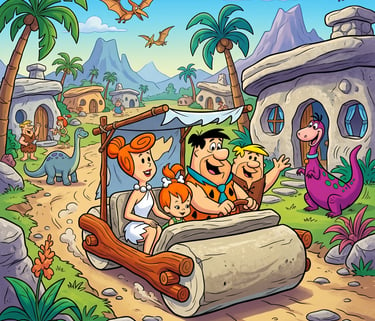
The Flintstones were a concept that worked perfectly: take the typical 1960s suburban American family—complete with a car, a nosy neighbor, an annoying boss, and a nagging wife—and set it all in the Stone Age.
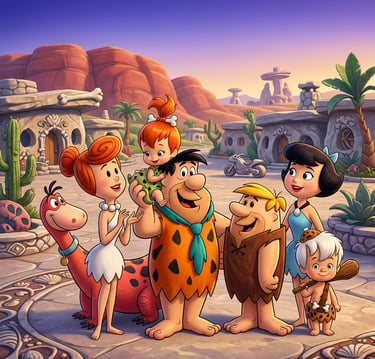
Fred Flintstone was the average, loud, well-meaning worker who was always getting into trouble. Wilma was the one who held everything together with saintly patience. Barney and Betty, the eternal neighbors. And Dino, the pet dinosaur who behaved like a dog.
The humor was all in the transposition: the foot-powered car, the record player with a thorn needle, the bird that served as a blender. It was creative, it was affectionate, and it had a humanity that few cartoons have managed to capture.
Brazil embraced The Flintstones so wholeheartedly that even today, decades later, anyone over 30 recognizes the show’s theme song from the very first notes.
🐻 Yogi Bear and Banzai — The Smartest Bear in the Park
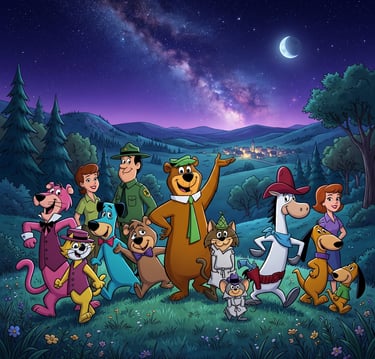
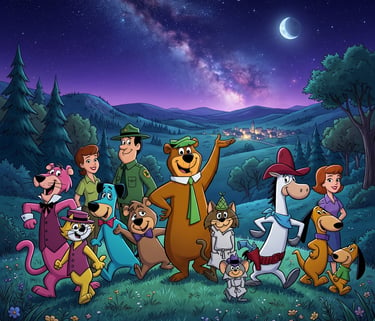
Yogi Bear was a bear in a tie who lived in Jellystone Park and had one constant plan: to steal tourists’ picnic baskets without getting caught by Ranger Banzai.
It was that simple. And it worked, episode after episode.
The dynamic between Yogi Bear—confident, articulate, always with a well-thought-out plan—and Boo Boo—his anxious sidekick who was always reminding him of the park rules—was comical and strangely relatable. You knew people like that in real life.
The line “I’m smarter than the smartest, I’m smarter than the average” stuck in the memory of an entire generation.
Wacky Races — The BEST of Them All
And now we come to my favorite Hanna-Barbera show.
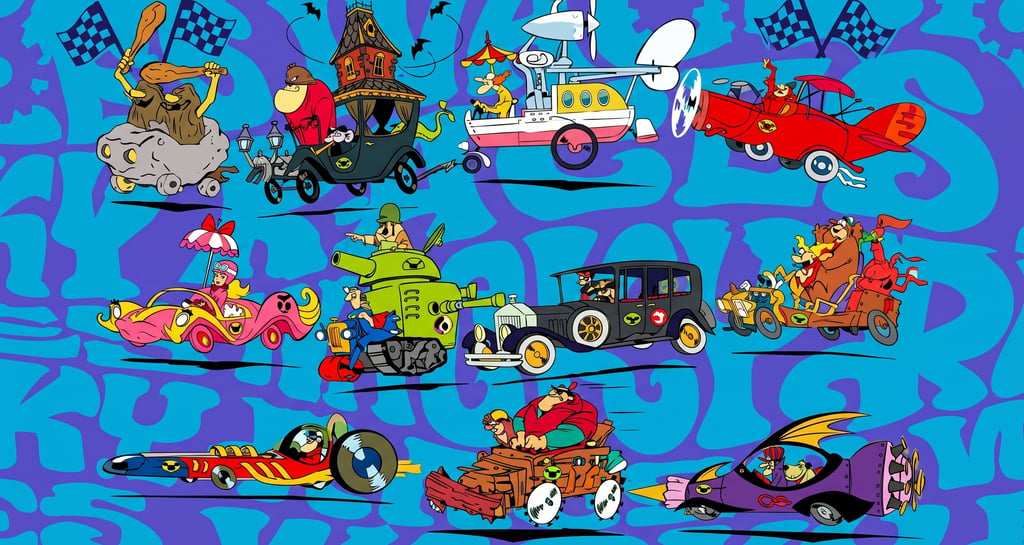
Wacky Races was such an absurd concept that it could only be brilliant: eleven completely different cars, with completely different drivers, all racing at the same time in a race that had no clear rules and always ended in unpredictable ways.
There was the Rock Car driven by the The Slag Brothers, Professor Pat Pending and Gimmick Car, and the The Ant Hill Mob Bulletproof Car. Each vehicle was a character in its own right.
But the ones who stole the show—who always stole the show—were Dick Dastardly and Muttley.
Dick Dastardly was the villain who just couldn’t win. Not for lack of trying—the man cheated in every episode with a dedication worthy of admiration. He blew up bridges, dug holes, set up elaborate ambushes. And in the end, he always fell behind while another car crossed the finish line.
And Muttley—that laugh. “Rsnsnsnsnsnsnss.” That hissing, nasal, mischievous little chuckle the dog let out every time Dick came up short. It didn’t matter that they were partners—Muttley found amusement in his boss’s misfortunes with a consistency that was, in fact, the most honest relationship in the cartoon.
What made Wacky Races different from everything else was that there was no fixed hero. You could root for whoever you wanted in each episode. And the race itself was always chaotic enough to surprise you—even if you knew that Dick Dastardly was going to lose in some creative way in the end.
It was pure, unpretentious entertainment, with memorable characters and an energy that hasn’t aged a day.
Dick Dastardly is, possibly, the most dedicated character in the history of animation. He never won. And he never stopped trying. There’s a life lesson in there that I’d rather not analyze too deeply.
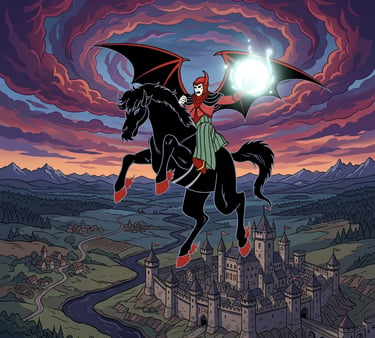
The villain was the Venger one of the most intimidating figures ever to appear in a children’s cartoon. Tall, black, with wings, a broken horn, and a voice that sounded like a constant threat. He wasn’t a comic villain. He didn’t stumble, he didn’t crack jokes, he didn’t have ridiculous plans. He was genuinely scary—and he pursued the group with a cold determination that created real tension.
And there was the dragon Tiamat, who frightened even the story’s villain. Uni, the unicorn who served as the group’s mascot—cute enough for the younger kids and annoying enough for the older characters.
What made Dungeons & Dragons different from everything else I watched was the tone. It was serious. There were real consequences within the narrative. The characters lost, suffered, and had doubts. Magic was dangerous. The world was beautiful and threatening at the same time—with dark forests, ruined castles, and creatures that were neither good nor evil.
It was true-to-life medieval fantasy, with all the complexity that entails.
I watched it with a fascination different from what I felt for other cartoons. It wasn’t just entertainment—it was a world I wanted to get to know better. The armor, the swords, the wizards, the dragons, the kingdoms with names impossible to pronounce. All of that fed something inside me that I couldn’t put into words at the time.
Today I know the name.
It was a love of the epic. Of fantasy narratives where good and evil wage battles that matter, where ordinary characters face forces far greater than themselves, where the journey is just as important as the destination.
Those cartoons didn’t have special effects. They didn’t have 3D animation, they didn’t have voice acting by famous actors, and they didn’t have soundtracks produced by multimillion-dollar studios.
They had characters. They had humor. They had that inexplicable quality that makes a child sit in front of the TV and not want to get up.
Each of them left something lasting: Woody Woodpecker’s laugh that sticks in your head, the perfect timing of Tom and Jerry, the Flintstones who seemed real in some strange way, Scooby and Shaggy who were cowards but went along anyway, and Wacky Races with that Dick Vigarista who never won and never gave up. And of course, Dungeons & Dragons, which shaped so much of my future tastes.
These are memories that don’t ask permission to surface. They arrive suddenly, at any moment, and for a few seconds you’re 8 years old again, sitting on the living room floor with your chin resting in your hands.
That’s priceless. I’ll be doing part 2 soon, since there are several other cartoons I watched with the same excitement.
What was your favorite? Tell me in the comments—and if there’s one I didn’t mention that left a mark on your childhood, I want to know about that too. This list can grow. 🐾
Contact
Contact us with suggestions or partnership opportunities
Email: contato@saudosista90.com
Phone: +55(27) 997309267
© 2026. All rights reserved.